The Medici and the Renaissance: Banking, Patronage, and Power
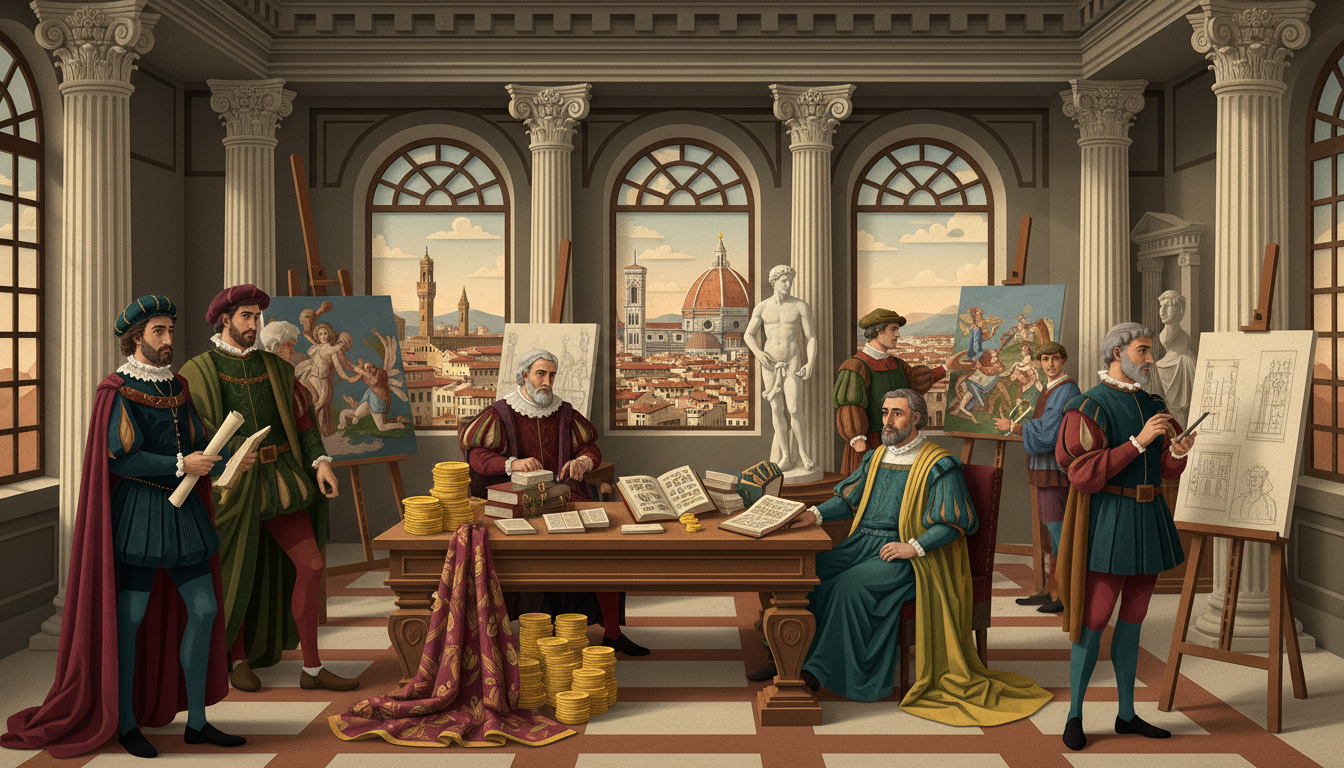
The Medici family are often described as the indispensable engine of the Italian Renaissance. Rising from Florentine merchants to Europe's preeminent bankers and rulers, the Medicis financed artists, architects, and humanists whose work rewired European culture. This article traces how banking, political maneuvering, and deliberate cultural patronage made Florence a crucible of innovation between the 15th and 16th centuries.
From Cloth Merchants to Banking Magnates (14th–15th centuries)
The Medici story begins in the markets and guilds of Florence. Giovanni di Bicci de' Medici (c. 1360–1429) founded the Medici bank in 1397, turning commercial acumen into a transregional financial network with branches across Europe, including Rome, Venice and Bruges. By transforming credit, bills of exchange, and bookkeeping into reliable instruments of long-distance trade, the family accumulated the wealth that would fund their public ambitions.
Cosimo de' Medici and the Art of Quiet Power (1389–1464)
Cosimo de' Medici, known as Cosimo il Vecchio, returned to Florence from exile in 1434 and established a model of influence that mixed private wealth with public benefaction. Although he never held formal office for long, Cosimo used his resources to sponsor civic projects and religious foundations. His commissions include the Palazzo Medici (designed by Michelozzo, begun 1444) and major support for the Basilica of San Lorenzo where he backed Filippo Brunelleschi's architectural innovations.
Banking, Diplomacy, and Political Reach
The Medici bank was not just a money machine; it was a diplomatic instrument. Bank branches linked Florence to popes, princes and merchant cities. Medici agents acted as financiers to popes and monarchs, which translated into political leverage in Rome and beyond. This financial reach allowed the family to place allies in key positions, influencing Florentine elections and Italian diplomacy while keeping the appearance of republican governance.
Patronage as Policy: Lorenzo il Magnifico (1449–1492)
Lorenzo de' Medici, called Lorenzo il Magnifico, personified the cultural face of Medici rule. Ruling Florence from the 1460s until his death in 1492, Lorenzo cultivated poets, philosophers and artists. He supported the Platonic Academy—sponsoring scholars like Marsilio Ficino (1433–1499) and the poet Angelo Poliziano (1454–1494)—and provided early patronage to young talents such as Sandro Botticelli and a teenage Michelangelo Buonarroti. Under Lorenzo, the Medici court became a magnet for humanist ideas and artistic experimentation.
Artistic Legacies: Commissions and Masterpieces
- Donatello and Brunelleschi: Early Medici patrons who helped revive classical forms.
- Botticelli: Works like Primavera and The Birth of Venus are associated with Medici circles and their interest in classical myth and Neoplatonism.
- Michelangelo: Supported by Lorenzo in his youth and later employed by Medici dukes; his Medici Chapel at San Lorenzo (tombs and sculptures) stands as a dramatic, personal monument to the family.
Beyond individual masterpieces, the Medici shaped institutions—founding libraries, funding translations of Plato, and endowing public works that made Florence a living museum of Renaissance art and thought.
Violence, Exile, and the Limits of Power: The Pazzi Conspiracy (1478)
The Medici ascent provoked powerful enemies. On April 26, 1478, the Pazzi Conspiracy attempted to topple Medici rule: Giuliano de' Medici was murdered in the Duomo, while Lorenzo was wounded but survived. Lorenzo's fierce response consolidated his control and revealed how political survival depended on both force and popular support.
Papal Medici and the Expansion of Influence (16th century)
The family produced two popes who extended Medici power into European geopolitics. Giovanni de' Medici became Pope Leo X (pontificate 1513–1521), and Giulio de' Medici became Pope Clement VII (pontificate 1523–1534). Their papacies brought Florence and Roman politics into a shared orbit, with both cultural patronage and less glorious episodes—such as the sack of Rome in 1527 and complex alliances—that exposed the fragility of Medici ambitions.
From Republic to Duchy: Cosimo I and the Medici State
After periods of exile and restoration, Cosimo I de' Medici (1519–1574) consolidated power: he became Duke of Florence in 1537 and, in 1569, was named Grand Duke of Tuscany. Cosimo I institutionalized Medici power, building bureaucratic structures, founding the Uffizi as administrative offices (which later became a world-famous gallery), and commissioning large-scale urban projects. The family's rule thus transformed from informal domination to dynastic sovereignty.
Legacy: Cultural Transformation and Complex Inheritance
The Medici legacy is double-edged. On the one hand, their patronage funded some of the finest art of the Renaissance and anchored humanist learning in Florence. On the other hand, their methods—financial manipulation, political intrigue, and dynastic consolidation—show how cultural glory was often inseparable from economic and coercive power.
Why the Medici Still Matter
We still visit Medici palaces, stand beneath their commissioned frescoes, and read the humanist texts their libraries preserved. The family transformed patronage into a force that could shape public taste, religious life, and political structures. Their story reminds us that artistic revolutions are rarely accidental: they are funded, cultivated, debated, and sometimes coerced.
Final anecdote: Lorenzo il Magnifico is said to have recognized the soft power of culture when he wrote poems and hosted debates in his garden—knowing that ideas and aesthetics could win loyalty as surely as armies. In Florence, the Medici turned beauty into a political language, and the Renaissance spoke it fluently.