The Kiss by Gustav Klimt: Gold, Desire, and the Vienna Secession
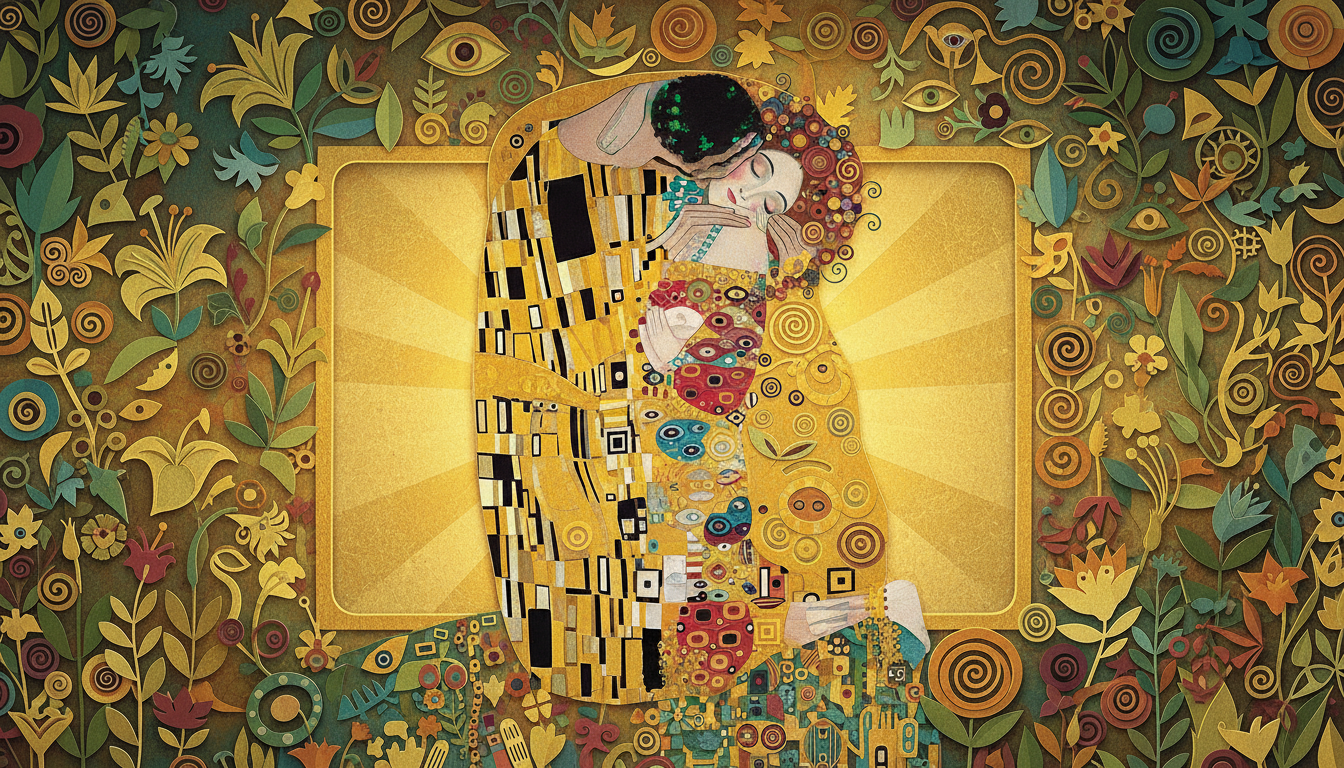
The Kiss (Der Kuss) by Gustav Klimt, painted between 1907 and 1908, is one of the most instantly recognizable images in modern art. A square canvas shimmering with gold leaf and intimate tenderness, the work marks the summit of Klimt’s celebrated "Golden Phase" and remains a touchstone for discussions of eroticism, ornament, and the tensions between modernity and tradition.
Historical context: Vienna at the turn of the century
Gustav Klimt (born July 14, 1862 – died February 6, 1918) worked at a moment when Vienna was a hotbed of artistic and intellectual ferment. The Vienna Secession, founded in 1897 by Klimt and other artists, sought to break with academic conventions and to create a new art for a changing society. By 1907–1908 Klimt had developed a highly personal visual language that blended Byzantine gilding techniques, the decorative arts, folk motifs, and the influences of Japonisme and Art Nouveau.
Key facts at a glance
- Title: The Kiss (Der Kuss)
- Artist: Gustav Klimt
- Date: 1907–1908
- Medium: Oil and gold leaf on canvas
- Dimensions: 180 × 180 cm
- Location: Österreichische Galerie Belvedere (Upper Belvedere), Vienna
Composition and technique: gilding, pattern, and embrace
At first glance the painting reads as an icon: the couple are wrapped in a glowing, patterned mantle, their heads pressed together in a quiet, prolonged kiss. Klimt’s use of gold leaf—applied alongside oil paint—gives the surface a jewel-like quality, recalling Byzantine mosaics and medieval icons. This gilded technique had become a hallmark of his so-called Golden Phase and helped give the image a sense of the sacred even as its subject remained deeply sensual.
Pattern plays a crucial narrative role. The man’s robe is adorned with geometric rectangles and black-and-white motifs, while the woman’s garment blooms with circles and floral shapes. Critics and scholars have traced these choices to a visual language of masculine and feminine types—angular forms versus organic, figurative versus decorative—so that the surface ornamentation helps tell the story of two bodies and wills meeting.
Symbolism and interpretations
The Kiss resists a single, fixed meaning. Interpretations often move between erotic intimacy, spiritual union, and the modern anxiety about identity and sexuality. Some readings emphasize its celebration of erotic love; others see in the painting a meditation on mortality and transcendence—an almost ritualized union that lifts the lovers out of ordinary time. The couple is set on a cliff or ledge above a flower-strewn meadow, a compositional choice that has been read as both precarious and timeless.
Biographical readings also persist. Klimt’s long-term relationship with the designer Emilie Flöge is frequently invoked: although Klimt rarely confirmed models or literal portraits, many viewers see echoes of his personal life in the tenderness and intimacy of the scene. Equally important is the painting’s dialogue with art history—Klimt borrows from Byzantine and medieval sources but reframes them within a modern, erotic idiom.
Reception and legacy
When first shown, Klimt’s work provoked mixed responses. Some contemporaries condemned what they saw as erotic excess and decadence; the same features that scandalized the conservative press helped make Klimt a hero for a younger, progressive audience. By the mid-20th century The Kiss had become a national treasure in Austria and an international icon of early modernism.
Its visual vocabulary—gold leaf, ornamental patterning, flattened space—has been endlessly reproduced and referenced in popular culture, advertising, fashion, and design. Yet despite countless reproductions, the original retains a luminous presence that printers and screens cannot fully replicate.
Where to see it today
The Kiss hangs in the Österreichische Galerie Belvedere (Upper Belvedere) in Vienna, where it remains one of the museum’s most-visited masterpieces. Seeing the painting in person still offers something surprising: the metallic gleam shifts with the light, textures come forward, and the scale—180 × 180 cm—gives an enveloping intimacy that reproductions tend to flatten.
Why The Kiss still matters
The Kiss speaks across generations because it marries technical virtuosity with emotional immediacy. It is a painting that is at once decorative and profound, public and private: an image of desire that also asks larger questions about the role of ornament, the legacy of religious imagery, and how modern art remakes the past. Whether read as an emblem of romantic love, a radical aesthetic experiment, or a cultural symbol of fin-de-siècle Vienna, Klimt’s masterpiece continues to arrest and inspire.
For visitors: If you travel to the Belvedere, give yourself time to stand back and then to approach; the painting rewards both the distant visual read and the close inspection of gilded surfaces and brushwork. And whether you love it or find it excessive, Klimt’s The Kiss forces us to consider how beauty, intimacy, and ornament can be woven into a single, unforgettable image.